

your vote is your power. use it.
A complete guide to registration deadlines, voting options, absentee ballots, ID requirements, and recent changes to Ohio election law, so you can cast your vote with confidence.
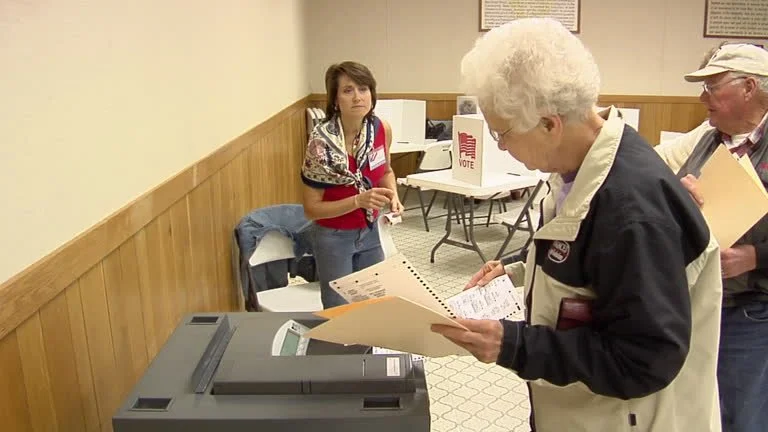
Know Your Vote: Ohio Election Dates, Deadlines & Your Rights in 2026
Ohio has two major elections this year. The May 5 Primary determines which candidates advance to the November 3 General Election. Both matter.
MAY 5, 2026 — Primary Election
This is where you choose Laura Rodriguez-Carbone as the Democratic nominee for Ohio's 7th Congressional District.
Register to Vote (or update your registration): April 6, 2026 by 9:00 p.m. Boards of elections are open late this day.
Early In-Person Voting Begins: April 7, 2026
Request an Absentee Ballot: Must be received by your county Board of Elections no later than April 28, 2026 by 8:30 p.m.
Return Your Absentee Ballot: Must be physically received by your county Board of Elections by 7:30 p.m. on Election Day, May 5. Do not rely on the mail alone — allow extra time or use a drop box.
Election Day Polls Open: 6:30 a.m. – 7:30 p.m.
Provisional Ballot Cure Deadline: May 9 — If you voted provisionally, you have four days after Election Day to present evidence of eligibility to your county Board of Elections.
NOVEMBER 3, 2026 — GENERAL Election
If Laura wins the primary, this is where we win the seat.
Register to Vote: October 5, 2026 by 9:00 p.m.
Early In-Person Voting Begins: October 6, 2026 (includes two Saturdays and one Sunday before Election Day)
Military & Overseas Absentee Voting Begins: September 18, 2026
Request an Absentee Ballot: No later than October 27, 2026 by 8:30 p.m.
Return Your Absentee Ballot: Received by your Board of Elections by 7:30 p.m. on November 3.
Election Day Polls Open: 6:30 a.m. – 7:30 p.m.
WHAT YOU NEED TO VOTE IN OHIO RIGHT NOW
-
An old address is fine as long as your current address is in the poll book; a suspended-but-unexpired license is also acceptable; an old hole-punched license or state ID is still valid if it has not expired. Note: Digital versions (such as a license saved in Apple Wallet) are not accepted.
-
U.S. Passport card is also acceptible.
-
The VA Veteran ID Card is issued digitally and is accepted as an exception to the no-digital-ID rule.
-
The form issued by the BMV while you wait for a new ID to arrive in the mail
IN-PERSON VOTING
Ohio law requires photo ID to vote in person, under H.B. 458 signed in January 2023. Acceptable forms of ID in Ohio include:
more information
If you don't have a qualifying photo ID You may cast a provisional ballot in person, but for it to be counted you must return to your county Board of Elections within four days after Election Day and present a valid photo ID. If you have a sincere religious objection to being photographed, you may complete an affidavit of religious objection in lieu of a photo ID.
Voting by mail ballot is another option
If obtaining a photo ID is a barrier. Mail voters may provide either a copy of a qualifying photo ID or just the last four digits of their Social Security number — no photo ID is required for voting by mail.
Free Ohio State ID
Any Ohio resident age 17 or older who does not have a driver's license may obtain a free state ID at any BMV office. You will need documents proving your name, date of birth, Social Security number, and Ohio address. Contact us if you need help navigating this process and we'll point you to the right resources.
Absentee Ballot Law Change: No More 4-Day Grace Period
Governor DeWine signed Senate Bill 293 (SB 293) in December 2025, eliminating Ohio's previous 4-day grace period for absentee ballots postmarked by Election Day. All absentee ballots from domestic voters must now be received by 7:30 p.m. on Election Day — no exceptions. Mail it early, or use a drop box.
Curbside Voting
Curbside voting is now available only to voters who are physically unable to enter their polling place. If this applies to you, call your county Board of Elections before Election Day to make arrangements. Note: elections officials cannot challenge or contest your disability claim.
Who Can Return Your Ballot For You
Ohio law restricts who can physically deliver your absentee ballot. Only the following may do so on your behalf:
Spouse, father, mother, father-in-law, mother-in-law, grandfather, grandmother, brother or sister of the whole or half blood, son, daughter, adopting parent, adopted child, stepparent, stepchild, uncle, aunt, nephew, or niece
If you have a disability, you may designate any person of your choosing to deliver your ballot — except your employer or a union officer.
Important: Whoever delivers your ballot must complete an attestation form (Form 12-P) in person at your county Board of Elections office. Without this step, your ballot may not be accepted.
Provisional Ballots — Know Your Rights
If there is any question about your eligibility at the polls, you have the right to cast a provisional ballot. Common reasons you might receive one:
Your name doesn't appear on the poll list
You're unable or decline to show ID
Your address has changed
Your registration shows you already requested an absentee ballot
If you vote provisionally: You have until the 4th day after Election Day to present evidence supporting your eligibility to your county Board of Elections.
What's Changing and What You Need to Know
The SAVE Act: A Threat to Ohio Voters
Here's something every Ohio voter should understand right now. On February 11, 2026, the U.S. House passed the "SAVE America Act" — a bill that would dramatically restrict who can register to vote. It passed the House by a slim margin (218–213) and now faces the Senate, where it would need 60 votes to overcome a filibuster.
What it would require: Proof of U.S. citizenship — like a passport or birth certificate — every time someone registers to vote or updates their registration. Online voter registration as we know it would effectively end. In-person verification at your county Board of Elections would be required.
Why it matters for Ohioans:
Ohio's standard REAL ID cards do not indicate citizenship: meaning the ID you carry every day would no longer be sufficient to register.
Roughly half of Americans don't have a valid passport.
An estimated 69 million women in America have a last name that doesn't match their birth certificate, due to marriage — creating an extra barrier for many Ohio women to vote.
Birth certificate copies in Ohio cost approximately $25 on average.
Ohio has only one Board of Elections per county. For rural residents, that can mean a significant drive just to register.
Is it law yet? No. As of February 2026, it has not passed the Senate and has not been signed into law. But it is moving, and Ohio voters should be prepared.
What you can do right now:
Register or update your registration immediately if you haven't already.
Gather and store key documents: your birth certificate, passport (if you have one), and a copy of your Social Security card.
Help a neighbor — share this page.
register to vote & check your registration status
Quick Reference Links
Ohio Secretary of State — Register to Vote: ohiosos.gov
Check Your Registration: voteohio.gov
Find Your County Board of Elections: https://www.ohiosos.gov/elections/elections-officials/county-boards-of-elections-directory/
Free Ohio State ID: https://www.bmv.ohio.gov/dl-id-card.aspx
Military & Overseas Voters: usvotefoundation.org
VoteRiders (ID Help): voteriders.org
I need a mail-in ballot application
Fill out the form below and our campaign will get the application to you!
Your County Board of Elections
These are your primary contacts for registration questions, polling place locations, absentee ballot status, and Election Day problems. Offices are open Monday–Friday during regular hours, and extend their hours during early voting periods.
Cuyahoga County BOE — (216) 443-8683 | Email: electioninfo@cuyahogacounty.gov | boe.cuyahogacounty.gov | 1803 Superior Ave, Cleveland
Medina County BOE — (330) 722-9278 | Email: boe@medinacounty.org | boe.ohio.gov/medina | 3800 Stonegate Dr, Suite C, Medina
Ashland County BOE — (419) 282-4224 | Email: boe@ashlandcountyohio.gov | boe.ohio.gov/ashland | 110 Cottage St, Suite 106, Ashland
Wayne County BOE — (330) 287-5480 | Email: boe@co.wayne.oh.us | waynecountyoh.gov | 200 Vanover St, Suite 1, Wooster
Who to Call: Voter Assistance Contacts

National Voter Assistance — Election Protection Coalition
A nonpartisan hotline staffed by trained volunteers year-round. Especially useful on Election Day if you encounter problems at the polls. They can look up your polling place, explain your rights, and escalate problems in real time.
English: 866-OUR-VOTE (866-687-8683) — call or text
Spanish: 888-VE-Y-VOTA (888-839-8682)
Asian languages (Mandarin, Cantonese, Korean, Vietnamese, Tagalog, Hindi, Urdu, Bengali, Punjabi): 888-API-VOTE (888-274-8683)
Arabic: 844-YALLA-US (844-925-5287)
ASL video call: 301-818-VOTE (301-818-8683)
Website: 866ourvote.org
Ohio Secretary of State — Elections Hotline
For statewide voter questions, registration issues, or to report election law concerns:
877-SOS-OHIO (877-767-6446) — toll-free
TTY/hearing impaired: 877-TTY-OHIO (877-889-6446)